On Writing: Why Your Words Matter More Than You Think
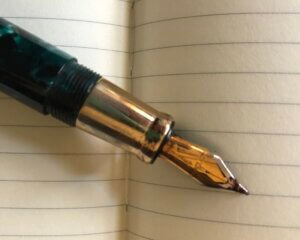 One thing that totally amazes me, and saddens me, is the number of people I meet, especially older folks, who say they really want to start writing, but don’t.
They don’t journal. They don’t write letters, at least not the old-fashioned snail mail kind. A grocery list pretty much sums up their repertoire of written material.
And yet these are not people without stories.
They are educated. They have loved ones. They like to read. They garden, travel, take photographs, work puzzles, care for people, bury people, and start over more times than anyone knows.
In other words, they have plenty to say.
Still, the idea of writing seems to raise anxiety levels so high that nothing ever gets done with all those words tucked away inside.
“I can’t write.” “I failed English.” “I don’t have time.” “I wouldn’t know where to start.”
I know all the excuses because I used them for over seven decades!
The Fear of Getting It Wrong
For most of my life, I was embarrassed by my inability to create a sentence that didn’t sound as if I had failed fifth grade. I never knew what to write about or what form it should take.
Should I write an essay? A poem? A short story? A memoir?
Like many people, I learned how to write academic papers and coherent documents for work. I could get the job done when I had to. But I sweat my way through it all.
Was my punctuation correct? Did I repeat myself? Had I made my point? What about spelling? Did it sound smart enough? Did it sound too much like me?
After I retired, I mopped the sweat off my brow and decided I would make pottery. Clay did not ask me to spell anything correctly.
But then someone challenged me to begin writing, the same way I want to challenge you today.
They passed me a notebook and a pen and suggested I write about anything I wanted.
I remember writing a few lines, and then I began to scrawl as if I were four years old. That is how I felt. Small. Awkward. Exposed.
It was painful.
No, I thought, writing wasn’t for me.
Writing Freedom No One Taught Me
But there was also a freedom I had never felt in school or in the workplace.
No one would ever grade my writing. No one ever needed to see it. There would be no red pen. No raised eyebrow. No final judgment.
But, of course, I argued. What happens to what I write when I die? What then?
We talked about the alternatives, and I knew, deep down, that this was just another excuse.
Today, many of my personal written thoughts are behind a password-protected wall in my computer. Believe me, there isn’t much there that would shake the world.
Still, it was freeing to know it could be done.
I could write without performing. I could write without explaining. I could write without proving I was a writer.
That may have been the beginning.
Why I Kept Writing
Some of the reasons I continued to write are simple.
As an introvert, I think a lot. But often I don’t know what I am thinking until I see it in writing. Thoughts circle inside my head like birds in a room. Once I put them on paper, they begin to settle. (Here a robin…there a crow!)
The older I get, the more difficult it is to remember what I did yesterday. A simple daily log saves me. It gives shape to my days. It reminds me that I did, in fact, live them.
Speaking of remembering, I started a five-year journal eleven years ago. In it, I write only a couple of lines about what happened on a given day.
There are long spans, even years, without entries. It doesn’t matter.
Today I can see that on a particular Wednesday, I had the same thing for supper on three different years.
Is this important? In the grand scheme of things, no.
But it makes me smile. It keeps me grounded and encourages me to write more.
That is one of the surprises of writing. Small things begin to matter not because they are dramatic, but because they are ours.
Journaling and Memoir
I think the most important writing we can do as we age falls into two categories: journaling and memoir.
By memoir, I am not necessarily talking about writing a book. Memoir can be written in one-paragraph snippets. A memory. A scene. A favorite recipe. A sentence someone said that changed everything. This sort of writing can be done on index cards and kept in a box!
It is a proactive form of self-care.
But it has to begin long before it is needed.
There may come a day when I can no longer tell a caregiver who I am and what I like. They won’t have time, or perhaps even interest, to read a whole book. But someone may share a few of my snippets (or even the whole box of cards) and give my life dimension.
I have worked in long-term care, caring for people who could no longer communicate who they really were.
Knowing little bits about the person you are caring for matters. It impacts quality of life at a time when it is easy for someone to feel useless or invisible.
My Writing Today
Some of the ways I write now include daily journaling to process my observations and feelings. Some days this is thoughtful and deep.
Other days it is a complaint about the weather, the dog, my schedule, or the fact that I once again forgot why I walked into the kitchen.
I have also used morning pages, à la Julia Cameron, who encourages people to write three longhand pages every morning. The purpose is not polished prose. The purpose is to clear the clutter, listen beneath the noise, and discover what is waiting there.
Sometimes I write blog posts. Sometimes I write notes for groups I lead. Sometimes I write snippets of memory. Sometimes I write a few lines of gratitude.
Sometimes I write badly!
That last sentence matters.
Sometimes I write badly, and the world does not end.
In fact, writing badly may be one of the great freedoms of later life. We have spent too many years trying to do things correctly. There comes a time when the deeper invitation is to do them honestly.
Begin Small
If you are one of those people who says, “I want to write, but…” I understand.
Perhaps the first step is not to write a book, or even a blog post, or even a proper journal entry.
Perhaps the first step is to write one sentence.
Write what you had for supper. Write the name of someone you miss. Write about the smell of your grandmother’s kitchen. Write about something you once believed and no longer do.
Do not worry about spelling. Do not worry about punctuation. Do not worry about whether anyone else will ever read it.
Just begin.
Because your words are not just words. They are evidence. They are breadcrumbs. They are small lanterns left along the path of a life…your life!
So here is my invitation: Take out a notebook, open a document, or grab the back of an envelope. Write five lines today. Not because they are perfect. Not because they are important, because they are yours. That is reason enough. And contact me if you would like more inspiration to begin or continue a practice that has the power to impact your life…and others after you are gone.
Want to read more like this?
