Have You Practiced Yet?
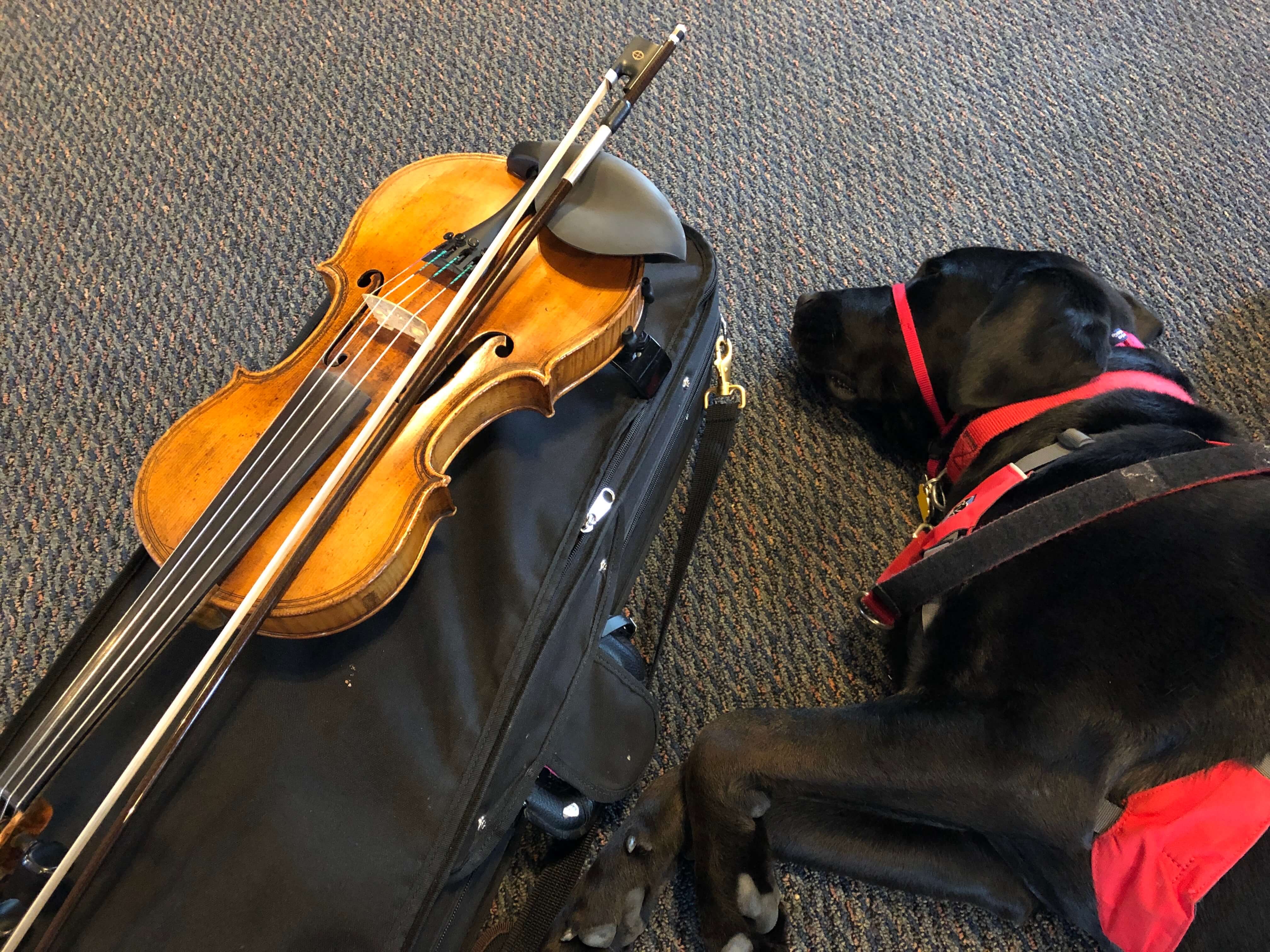
 I use the phrase spiritual practice a lot, and I’m aware that, for some readers, this phrase makes things more complicated than necessary.
What if we simply talk about practice?
- Not practice as in mastery.
- Not practice as in getting it right.
- But practice as in returning to something often enough for it to leave a mark.
Whether we call it spiritual or not, every life is shaped by what we practice. What we repeat. What we come back to when the novelty wears off, and the work remains.
Practice Begins Before We Understand It
Long before I had words for reflection or meaning, I was practicing.
As a child I practiced ‘silence’ when adults were talking, or when I didn’t want my parents to notice it was bedtime. I practiced ’spying’ on my older sister, believing that she might know something that I wanted to know.
More formally, I practiced music—piano first, then violin, then trumpet. I practiced because it was expected of me. I practiced because someone else believed it mattered.
I didn’t realize that practicing a passage until my fingers knew it better than my mind did was the goal. I thought I just wanted to be part of the crowd and go to ball games. I confess there is still alot of that in me 70 years later!
At the time, practice felt like a chore. Something to endure before getting on with life. What I couldn’t see then was how repetition was already shaping me. It was teaching me how to stay with something that didn’t immediately reward me, how to tolerate boredom, and how to trust that effort could eventually change what I felt was impossible.
Those lessons arrived painfully. They still do, sometimes.
Learning by Doing—and Doing Poorly
Some practices we choose. Others find us.
Years ago, I bought a goat. When I struggled through my first attempt at milking, the person who sold her to me watched patiently and then said, with great confidence, that I should be able to do it in about three minutes.
It took me half an hour.
There was awkwardness, spilled milk, and the humbling realization that something that looked simple required patience I didn’t yet have.
Practice has a way of exposing our assumptions about competence. It slows us down. It insists that we be beginners longer than we’d like.
But it also teaches us something essential: how to remain present while being clumsy. How to keep showing up even when we’re not impressive. (Goats have a way of sounding VERY demanding when it is time to be milked.)
That lesson has served me in far more places than Molly ever intended!
The Practice No One Signs Up For
Some of the most influential practices in life are the ones we never volunteer for.
Failure is one of them.
It took me thirty years to graduate from college. I went through a divorce. I went bankrupt. I was diagnosed with a serious illness. I lost a beloved home. (Not all in the same year, thank goodness!)
These experiences weren’t chapters I wanted to write, and they certainly weren’t part of any long-range plan. And yet, each became a form of practice:
- How to fail.
- How to survive.
- How to begin again.
Failure has a way of repeating its lessons until we stop resisting them. It strips away timelines and tidy narratives. It dismantles the belief that effort always leads to predictable outcomes. (If you study harder, you’ll be an A student. Sure!!)
What these practices, which we often call failures, offer instead is a slower, sturdier kind of knowing.
Failure teaches endurance. It teaches honesty. It teaches us how to live without applause or certainty. If we stay with it long enough, it reshapes how we measure success and how we extend grace—both to ourselves and to others.
The Small, Ordinary Practices of Being Human
Not all practices announce themselves through major life events.
Some of them show up in small, familiar ways: weight gained and lost…and gained again, deadlines missed, conversations that don’t go as planned, moments when we realize we’ve offended someone without meaning to.
These are not dramatic failures, but they are persistent ones.
They return us to humility. They ask us to repair rather than perform. Over time, they teach us how to begin again without self-contempt.
Unlike what I think my mother expected from my violin, we don’t practice for perfection.
The practice is ‘recovery’. We practice learning how to live with our own limitations without giving up on growth altogether.
So yes, I am a happy fiddler today, but you won’t ever hear me at Carnegie Hall.
What Practice Gives Us Over Time
Practice is often mistaken for performance, but its true gifts are quieter.
Over time, practice forms wisdom—not the kind that needs to announce itself, but the kind that listens more than it speaks.
It forms patience—not endless patience, but enough to pause before reacting.
It forms compassion—not because we set out to be compassionate, but because repeated failure makes it impossible not to recognize ourselves in others.
These are not rewards handed out for good behavior. They are capacities that develop slowly, almost invisibly.
Something else happens as well. People who have practiced living with imperfection often become steadier presences.
Others feel less judged in their company.
Blessing flows from them not because they intend it to, but because they have learned how to remain imperfect…even after practicing.
The Cost and the Joy Live Together
This is what practicing violin has taught me over many years about practicing in general:
- Practice costs us time and pride. It costs us the illusion that we should be finished by now.
- It asks us to repeat lessons we thought we had already learned.
- It keeps us close to vulnerability longer than we would prefer.
There is grief in that. There is fatigue. Sometimes there is resentment.
And still, there is joy.
There is joy in familiarity. Joy in knowing our own rhythms. Joy in discovering that we can live inside imperfection without falling apart.
Practice teaches us that grief and gratitude do not cancel each other out. They learn to share the same space.
A Lifelong Invitation
So perhaps the question is not whether we have a ‘spiritual’ practice.
Perhaps the better question is simply this: What are we practicing now?
You don’t have to name it.
You don’t have to do it well.
You don’t have to be consistent or confident.
Life will never be perfected. It can only be practiced.
What to read more of TheReflectivePen?

